
Dodgers vs Toronto Blue Jays Match Player Stats: Ohtani, Yamamoto Lead Breakdown

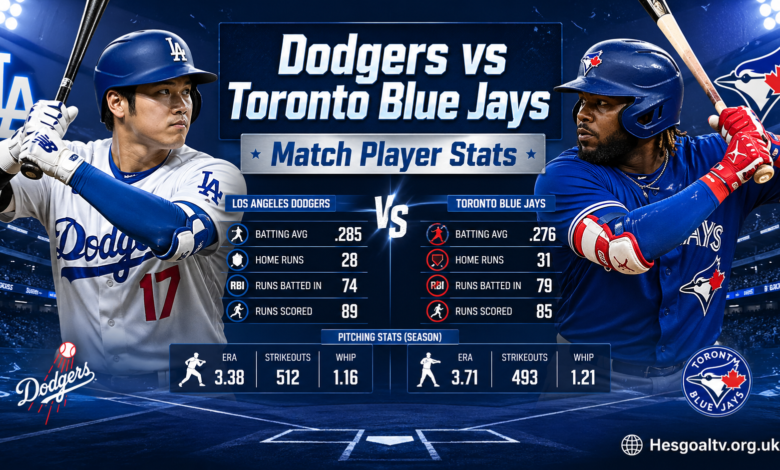
The matchup between the Los Angeles Dodgers and the Toronto Blue Jays always brings a strong mix of star power, pitching quality, batting depth, and international baseball interest. Fans search for detailed numbers because this game is not only about the final score. It is also about how each player performed, who controlled the tempo, and which moments changed the direction of the contest.
This article provides a complete and easy-to-understand breakdown of Dodgers vs Toronto Blue Jays Match Player Stats, focusing on key names such as Shohei Ohtani, Yoshinobu Yamamoto, Kevin Gausman, Davis Schneider, and Vladimir Guerrero Jr. The goal is to explain the game through performance, batting impact, pitching control, scoring chances, and the numbers that shaped the result.
Dodgers vs Toronto Blue Jays Match Overview
The Los Angeles Dodgers defeated the Toronto Blue Jays 4-1 in a game that was shaped by strong pitching, patient batting, and timely offensive execution. The Dodgers did not need a huge scoring explosion to control the match. Instead, they relied on efficient hitting, disciplined at-bats, and a composed pitching performance that kept Toronto under pressure.
The Blue Jays entered the matchup needing offensive rhythm, but they struggled to convert walks and limited opportunities into runs. Toronto had moments where it could have changed the game, yet the Dodgers’ pitching staff prevented big innings. This made the final score reflect not only Los Angeles’ quality but also Toronto’s missed chances at the plate.
Dodgers vs Toronto Blue Jays Match Player Stats Summary
The main story of Dodgers vs Toronto Blue Jays Match Player Stats was the balance between Dodgers pitching and timely batting. Yoshinobu Yamamoto delivered a strong start, allowing only one earned run across six innings while striking out six hitters. His control helped the Dodgers stay ahead and limited Toronto’s ability to build offensive momentum.
On the batting side, Shohei Ohtani continued to influence the game with his ability to reach base and drive in runs. Alex Freeland also made an important contribution with three hits, while Kyle Tucker added an RBI despite striking out three times. For Toronto, Kevin Gausman pitched competitively, but the Blue Jays’ offense could not give him enough support.
Los Angeles Dodgers Key Player Stats
The Dodgers’ key performers showed why Los Angeles remains one of the most dangerous teams in baseball. Yoshinobu Yamamoto recorded six innings pitched, allowed five hits, gave up one earned run, struck out six, and walked only one batter. That type of pitching line gives any team a strong chance to win, especially when the offense provides early support.
Shohei Ohtani went 1-for-3 with one RBI, two walks, and one run scored, showing that his impact was not limited to hits alone. Alex Freeland went 3-for-4 with one RBI and one run, making him one of the most productive hitters in the game. Kyle Tucker added another RBI, helping the Dodgers turn limited chances into important runs.
Shohei Ohtani Performance Breakdown
Shohei Ohtani’s performance stood out because he remained involved in the Dodgers’ offensive rhythm throughout the game. Even when he was not collecting multiple hits, he found ways to reach base, force pitchers to work harder, and create scoring pressure. His RBI also gave the Dodgers a valuable contribution in a low-scoring contest.
Ohtani’s ability to draw two walks showed his plate discipline and the respect Toronto pitchers had for him. A player like Ohtani changes how opponents approach an entire lineup because pitchers cannot afford mistakes. His on-base presence allowed the Dodgers to keep innings alive and maintain pressure against the Blue Jays’ defense.
Yoshinobu Yamamoto Pitching Analysis
Yoshinobu Yamamoto was one of the biggest reasons the Dodgers controlled the game. His six-inning performance gave Los Angeles exactly what it needed from a starting pitcher. He allowed just one earned run, struck out six hitters, and limited walks, which helped prevent Toronto from creating dangerous rallies.
Yamamoto’s command was the key element of his outing. He did not simply overpower hitters; he mixed location, movement, and timing to keep the Blue Jays uncomfortable. In a matchup where one big inning could have changed everything, Yamamoto stayed calm and kept Toronto’s best hitters from producing game-changing contact.
Toronto Blue Jays Key Player Stats
Toronto’s player stats showed effort but not enough offensive production. Kevin Gausman delivered a respectable pitching performance, going six innings while allowing three earned runs on three hits. He struck out eight Dodgers hitters, which shows he had swing-and-miss quality. However, the few mistakes he made were enough for Los Angeles to take control.
Davis Schneider reached base twice through walks and scored Toronto’s only run, giving the Blue Jays one of their few bright spots. Vladimir Guerrero Jr. also reached base with a walk but finished without a hit. Toronto needed more from its middle-order bats, but the Dodgers’ pitching staff did well to limit damage.
Kevin Gausman Pitching Performance
Kevin Gausman’s pitching line deserves a fair reading because the loss does not fully define his performance. He pitched six innings, allowed only three hits, and struck out eight batters. Those numbers show that he was competitive and capable of handling a strong Dodgers lineup for long stretches of the game.
However, Gausman gave up three earned runs, and in a low-scoring matchup, that was a major difference. The Dodgers did not need many hits to punish mistakes. They used patience, timing, and situational hitting to turn limited opportunities into runs. Gausman kept Toronto close, but the Blue Jays’ offense could not respond strongly enough.
Dodgers Batting Stats and Offensive Impact
The Dodgers’ offense was not built on a massive hit total in this game, but it was effective when it mattered. Los Angeles showed the value of productive at-bats, walks, and timely contact. Ohtani, Freeland, and Tucker all contributed to the scoreboard, proving that different parts of the lineup could create pressure.
Alex Freeland’s 3-for-4 performance was especially valuable because it added consistency to the Dodgers’ offense. In games where pitching dominates, a player who can reach base multiple times becomes extremely important. The Dodgers used that type of production to stay ahead, support Yamamoto, and force Toronto to chase the game.
Blue Jays Batting Stats and Offensive Struggles
Toronto’s batting performance was the main reason the team could not stay level with the Dodgers. The Blue Jays managed to reach base at times, but they lacked the decisive hit that could turn pressure into runs. Davis Schneider walked twice and scored, but the rest of the lineup did not produce enough support.
Vladimir Guerrero Jr. reaching base through a walk was useful, but Toronto needed more power and run production from its star hitters. Against a disciplined pitcher like Yamamoto, every missed opportunity becomes more costly. The Blue Jays’ inability to convert runners into runs made the difference between staying competitive and falling behind.
Pitching Comparison: Dodgers vs Blue Jays
The pitching comparison was one of the most interesting parts of Dodgers vs Toronto Blue Jays Match Player Stats because both starting pitchers had strong elements in their performances. Yamamoto allowed one earned run with six strikeouts and one walk, while Gausman allowed three earned runs with eight strikeouts and two walks. Both pitchers showed quality, but Yamamoto was more efficient in limiting damage.
The difference came from run prevention and support. Gausman had more strikeouts, but Yamamoto allowed fewer runs and gave the Dodgers a cleaner path to victory. Los Angeles also benefited from bullpen support, while Toronto could not use Gausman’s strikeout-heavy outing as a platform for a comeback.
Fielding, Defense, and Game Control
Defense played an important role because low-scoring games often depend on clean execution. The Dodgers supported their pitching staff by preventing extra pressure and keeping Toronto from extending innings. When pitchers know the defense behind them is reliable, they can attack the zone with more confidence and avoid unnecessary walks.
Toronto’s defense had to handle pressure from a Dodgers lineup that can create trouble quickly. Even when Los Angeles did not dominate with power, it forced Toronto to stay alert on every pitch. Good defense can keep a team alive, but without enough batting production, Toronto’s fielding alone was not enough to shift the final result.
Key Moments That Changed the Game
The key moments in this matchup came from the Dodgers’ ability to take advantage of scoring chances. Ohtani’s RBI was important because it added pressure and gave Los Angeles momentum. Freeland’s multi-hit performance also helped build innings and kept the Dodgers moving forward when Toronto needed quick outs.
For the Blue Jays, their best chances came when they reached base through walks and had opportunities to create pressure. However, Yamamoto and the Dodgers’ pitching staff avoided the big mistake. In a 4-1 game, the difference was not one explosive inning but several small moments that Los Angeles handled better than Toronto.
Head-to-Head Context: Dodgers vs Toronto Blue Jays
The Dodgers and Blue Jays are from different leagues, which makes their matchups feel more special to many fans. When they meet, the games often attract attention because both teams have strong fan bases, recognizable stars, and postseason-level expectations. This is why searches for Dodgers and Blue Jays player numbers remain popular after major games.
The recent World Series connection also adds extra interest to this matchup. Fans want to compare how both teams perform against each other after high-pressure meetings. That makes Dodgers vs Toronto Blue Jays Match Player Stats more than a basic box score. It becomes a way to understand momentum, team identity, and individual player impact.
What the Stats Tell Us About the Dodgers
The stats show that the Dodgers can win without needing a complete offensive explosion. That is a sign of a strong team because championship-level clubs often win in different ways. In this game, Los Angeles used pitching control, timely hitting, and star-player discipline to create a comfortable result.
Yamamoto’s performance confirmed the importance of reliable starting pitching, while Ohtani’s contribution showed how valuable elite plate discipline can be. Freeland’s batting display also showed that the Dodgers are not dependent on only one superstar. Their lineup depth gives them multiple ways to pressure opponents and protect leads.
What the Stats Tell Us About the Blue Jays
For Toronto, the stats point toward a need for stronger offensive execution. The Blue Jays had some opportunities, but they did not create enough consistent contact or timely hits. Walks helped them reach base, yet without extra-base power or clutch hitting, those chances did not become enough runs.
The positive sign was Gausman’s ability to strike out eight batters and keep the Dodgers from fully breaking the game open. However, strong pitching must be matched by run support. Toronto’s lineup needs to find better rhythm, especially against elite pitchers who do not offer many mistakes during the game.
Player of the Game
Yoshinobu Yamamoto deserves strong consideration as the player of the game because his pitching performance shaped the entire contest. Six innings, one earned run, six strikeouts, and only one walk gave the Dodgers stability. He controlled Toronto’s offense and made sure the Blue Jays could not build sustained pressure.
Shohei Ohtani also deserves recognition because he contributed with an RBI, two walks, and a run scored. His impact goes beyond one hit because his presence changes how pitchers attack the Dodgers lineup. Still, Yamamoto’s control on the mound was the foundation of the victory, making him the most important player in this match.
Complete Batting Stats Review
A complete batting review shows that Los Angeles did more with its chances than Toronto. Ohtani reached base three times, Freeland produced three hits, and Tucker added an RBI. These contributions gave the Dodgers enough offense to support a strong pitching performance and keep the Blue Jays behind on the scoreboard.
Toronto’s batting review is more frustrating because the team did not completely disappear from the bases. Schneider walked twice and scored, while Guerrero Jr. also earned a walk. However, the lack of run-producing hits made the difference. Toronto needed a double, home run, or timely single to change the game, but that moment never fully arrived.
Complete Pitching Stats Review
The pitching numbers were strong on both sides, but the Dodgers had the better overall result. Yamamoto’s outing was cleaner in terms of run prevention, and that mattered more than total strikeouts. He kept his walk total low, limited damaging contact, and left the game with Los Angeles in a winning position.
Gausman’s eight strikeouts were impressive, and many teams would accept that level of work from a starter. The issue was that the Dodgers were efficient when they reached base. Three earned runs over six innings is not a poor outing, but against Yamamoto and a controlled Dodgers bullpen, it became too much for Toronto to overcome.
Why Ohtani and Yamamoto Defined the Match
Ohtani and Yamamoto defined this game in different but connected ways. Ohtani represented offensive pressure, plate discipline, and run creation. Yamamoto represented pitching command, control, and run prevention. Together, they gave the Dodgers a winning formula that Toronto could not match across nine innings.
This is why the title focuses on both players. Ohtani attracts attention because of his superstar status and offensive influence, while Yamamoto earned the spotlight through his mound performance. Their combined impact is the clearest explanation of how Los Angeles turned the game into a controlled 4-1 win.
Dodgers Team Balance and Winning Formula
The Dodgers’ winning formula in this game was based on balance. They did not rely only on home runs, and they did not need one player to carry the entire offense. Instead, they mixed walks, timely hits, pitching control, and defensive steadiness. That type of balance is difficult for opponents to overcome.
A team with the Dodgers’ depth can win high-scoring games, but this matchup showed they can also win controlled, tactical games. That is important for long-term success because postseason-style baseball often depends on pitching, patience, and execution. This win displayed all three qualities in a simple but effective way.
Blue Jays Lessons From the Match
The Blue Jays can take lessons from this loss, especially in terms of offensive timing. They had to deal with a quality pitcher, but strong teams must find ways to score even against elite arms. Walks are useful, but they must be followed by hits that move runners and produce runs.
Toronto also needs more from its central hitters in games like this. When a team faces a lineup as dangerous as the Dodgers, one run is rarely enough. The Blue Jays’ pitching kept the score manageable, but the offense must improve if Toronto wants to win these types of high-profile matchups.
Why This Game Matters for MLB Fans
This game matters because it featured star names, strong pitching, and a recent high-profile matchup history. Dodgers fans wanted to see Ohtani and Yamamoto influence another important game, while Blue Jays fans wanted signs of recovery and competitive strength. That made every at-bat and pitching sequence more meaningful.
For neutral MLB fans, this matchup offered a useful example of how baseball games are won through details. It was not only about home runs or highlight moments. It was about command, plate discipline, defensive support, missed chances, and the small statistical edges that decide the final result.
Dodgers vs Toronto Blue Jays Match Player Stats and SEO Search Intent
People searching for Dodgers vs Toronto Blue Jays Match Player Stats usually want more than a final score. They want to know which players performed best, how the pitchers compared, who drove in runs, and which hitters struggled. A good stats-based article must answer these questions clearly and quickly.
This search intent is especially strong when players like Ohtani, Yamamoto, Gausman, and Guerrero Jr. are involved. Fans want quick facts, but they also want interpretation. That is why a strong article should combine tables, summaries, individual player analysis, and a clear explanation of how the numbers shaped the game.
Suggested Stats Table for Readers
A helpful article should include a batting stats table with player name, team, position, hits, runs, RBIs, walks, and strikeouts. This allows readers to scan the most important offensive numbers quickly. For this match, names like Ohtani, Freeland, Tucker, Schneider, and Guerrero Jr. should be included.
A second table should focus on pitching stats, including innings pitched, hits allowed, earned runs, strikeouts, walks, decision, and saves if relevant. Yamamoto and Gausman should appear at the top of that section because their performances defined the rhythm of the game. Tables improve readability and keep sports content user-friendly.
Final Takeaway From the Game
The biggest takeaway from this matchup is that Los Angeles controlled the game through pitching efficiency and timely offense. Yamamoto gave the Dodgers a strong start, Ohtani added offensive value, and Freeland provided consistent hitting. The Dodgers did not waste their chances, which became the difference in a low-scoring contest.
Toronto showed flashes of competitiveness, especially through Gausman’s strikeouts and Schneider’s ability to reach base. However, the Blue Jays could not generate enough offense to challenge the Dodgers late in the game. The numbers show a clear story: Los Angeles was sharper in the moments that mattered most.
Conclusion
The Dodgers vs Toronto Blue Jays Match Player Stats reveal a game controlled by the Dodgers’ pitching and supported by smart offensive execution. Yoshinobu Yamamoto delivered a strong performance on the mound, while Shohei Ohtani continued to influence the game with his plate discipline and run production. Alex Freeland also played a major role with his three-hit performance.
For the Blue Jays, Kevin Gausman pitched better than the final result may suggest, but Toronto’s offense did not provide enough support. Davis Schneider reached base and scored, while Vladimir Guerrero Jr. walked but could not deliver a big hit. Overall, the Dodgers earned the win because their top players executed better in key situations.
FAQs
Who was the best player in Dodgers vs Toronto Blue Jays match?
Yoshinobu Yamamoto was the best player because he controlled the game from the mound. He pitched six innings, allowed only one earned run, struck out six batters, and walked just one. His performance limited Toronto’s offense and gave the Dodgers a strong foundation for victory.
Shohei Ohtani also had a major impact with one RBI, two walks, and one run scored. However, Yamamoto’s pitching shaped the entire game and prevented the Blue Jays from building momentum. That makes him the strongest candidate for player of the game.
What were Shohei Ohtani’s stats against the Blue Jays?
Shohei Ohtani went 1-for-3 with one RBI, two walks, and one run scored. These numbers show his ability to contribute even without a multi-hit game. His walks were important because they kept pressure on Toronto’s pitchers and helped the Dodgers extend innings.
Ohtani’s value was also seen in how the Blue Jays approached him carefully. His presence in the lineup affects pitching strategy because opponents know one mistake can change the game quickly. That makes his performance important beyond the basic box score.
How did Yoshinobu Yamamoto perform against Toronto?
Yoshinobu Yamamoto performed very well against Toronto. He pitched six innings, allowed five hits, gave up one earned run, struck out six hitters, and walked one. His command allowed him to control the Blue Jays lineup and prevent big scoring opportunities.
His outing was especially valuable because it came in a game where runs were limited. By keeping Toronto to one run during his start, Yamamoto gave the Dodgers enough space to protect their lead and finish the game with confidence.
What was the final score of Dodgers vs Toronto Blue Jays?
The Dodgers defeated the Toronto Blue Jays 4-1. The score reflected a controlled performance from Los Angeles, built on strong starting pitching, timely hitting, and clean game management. The Dodgers did not need a huge offensive night to secure the win.
Toronto managed only one run, which made it difficult to challenge the Dodgers late in the game. Even though Kevin Gausman struck out eight batters, the Blue Jays’ offense could not produce enough runs to support him.
Which Blue Jays player had the best performance?
Kevin Gausman had one of the best individual performances for the Blue Jays despite taking the loss. He pitched six innings, allowed three hits, gave up three earned runs, and struck out eight Dodgers hitters. His strikeout total showed that he had strong stuff on the mound.
Davis Schneider also deserves mention because he walked twice and scored Toronto’s only run. However, the Blue Jays needed more hitting production from the lineup overall. Gausman’s pitching kept Toronto competitive, but the offense could not match the Dodgers.
How did Kevin Gausman pitch against the Dodgers?
Kevin Gausman pitched competitively against the Dodgers. He completed six innings and struck out eight batters, which is a strong number against a dangerous lineup. He allowed only three hits, showing that he was difficult to square up for much of the game.
The issue was run prevention. Gausman allowed three earned runs, and in a game where Toronto scored only once, that became costly. His performance was not poor, but the Dodgers made enough of their chances to win.
Why did the Dodgers beat the Toronto Blue Jays?
The Dodgers beat the Blue Jays because they combined strong pitching with efficient offense. Yamamoto limited Toronto’s lineup, Ohtani reached base and drove in a run, and Freeland delivered three hits. Los Angeles handled key moments better than Toronto.
The Blue Jays struggled because they could not turn baserunners into runs. Walks gave them some chances, but they lacked the timely hits needed to change the game. In the end, the Dodgers were more complete in pitching, batting, and execution.
What do the Dodgers vs Toronto Blue Jays Match Player Stats show?
The Dodgers vs Toronto Blue Jays Match Player Stats show that Los Angeles was more efficient and composed in key moments. Yamamoto controlled the mound, Ohtani added offensive pressure, and Freeland gave the Dodgers important batting production.
For Toronto, the stats show a lack of run support despite a respectable pitching effort from Gausman. The Blue Jays reached base at times but could not produce enough damaging contact. That difference explains the 4-1 result.
Is Dodgers vs Blue Jays a major MLB rivalry?
Dodgers vs Blue Jays is not a traditional division rivalry because the teams play in different leagues. However, recent high-profile meetings and star-player matchups have made the games more interesting for fans. When both teams are competitive, the matchup gets strong attention.
The presence of players like Ohtani, Yamamoto, Guerrero Jr., and Gausman adds to the appeal. Fans enjoy comparing team strength, player stats, and postseason potential whenever these two teams meet.
Where can fans check full Dodgers vs Blue Jays player stats?
Fans can check full player stats through official MLB box scores, sports news websites, team websites, and major sports platforms. These sources usually provide batting lines, pitching lines, scoring summaries, and game leaders after every matchup.
For quick reading, a good article should summarize the most important stats in simple language. Readers usually want to know the final score, top hitters, best pitchers, RBIs, strikeouts, and the key moments that decided the game.